Build lean muscle, deliberately
Add quality lean mass through progressive overload and considered programming, coached at UNTIL Marylebone or written for your own gym.

Overview
How do you build muscle?
Muscle is built by asking it to do progressively more, feeding it enough to grow, and recovering enough to adapt. All three, consistently, for months. Miss any one and the other two largely go to waste, which is why so much hard training produces so little.
For clients here it is rarely about size for its own sake. Lean mass is what changes body composition, protects metabolic rate, loads bone, and decides how capable you are in your seventies. It is also the tissue that is hardest to add and easiest to lose, which is a good argument for building it properly while you can.
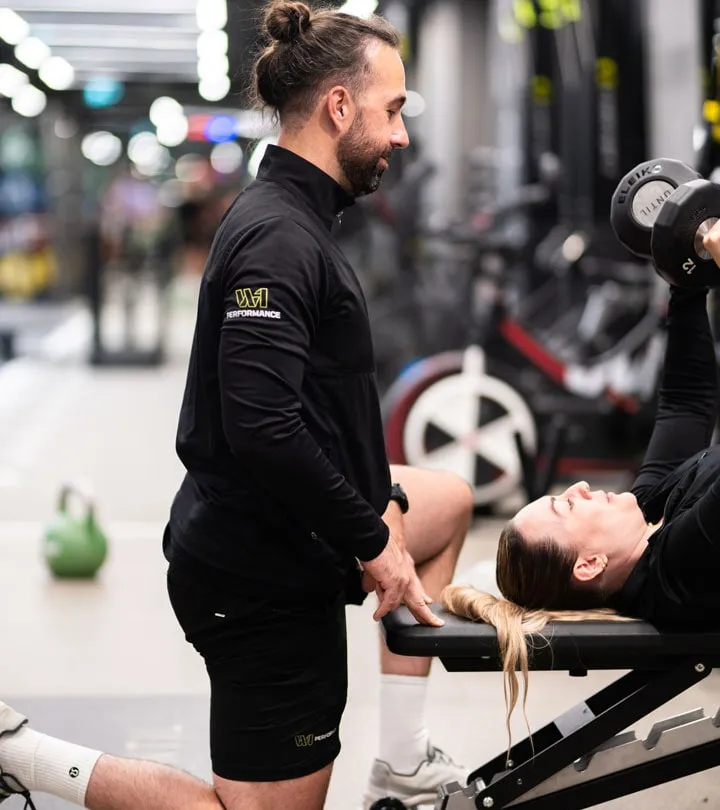
The programming is unremarkable and effective: compound work loaded progressively, enough volume per muscle group to matter, technique coached so range and tension are real, and a nutrition strategy with the protein set to support it. Delivered through a coaching programme, in person at UNTIL Marylebone and remotely between sessions.
The benefits of building lean muscle
Your shape changes, not just your weight
Lean mass is what fills out a frame and narrows a waist at the same bodyweight. It is the reason body composition, rather than the number on the scales, is the measure worth watching.
A larger metabolic engine
More lean mass means more tissue doing work at rest and more capacity to handle fuel. It makes maintaining a leaner body composition considerably easier than doing it through restriction alone.
Bone loaded as a by-product
The progressive loading that builds muscle places a healthy demand on bone at the same time. Two of the tissues that most determine later-life function get trained by the same sessions.
Capability that lasts decades
Muscle is the tissue whose loss most limits people later on. Building a genuine reserve now is one of the few things that reliably protects independence thirty years out.
What gets in the way
Why muscle is not being built
- Training that never gets heavier or harder, so there is nothing to adapt to
- Too little volume for the muscle groups you actually want to build
- Range of motion and tension compromised by technique, so the work is lighter than it looks
- Protein and total intake set too low to build anything
- Sleep too short for the recovery that adaptation depends on
- Programmes changed every few weeks, so no block ever runs long enough to work
How it works
How Leigh programmes for lean mass
Build
Technique coached inside the set over 6–12 months, so range and tension are genuine, with load progressed deliberately across blocks rather than week to week.
See treatment detail →Sprint
A focused 6–12 week block when adding lean mass is the one clear target.
See treatment detail →Vitality Profile
Nutrition and Sleep & Recovery are assessed alongside Strength & Fitness, because muscle is built from all three.
See treatment detail →FAQ
Frequently asked
questions
Can I build muscle and lose fat at the same time?
To a degree, particularly if you are new to structured strength training or returning after a gap. For most trained people it is more productive to emphasise one at a time in planned blocks, which is how the programme is sequenced rather than trying to do both at half strength.
How long before I see a difference?
Strength usually improves within a few weeks as coordination sharpens, while visible change in lean mass typically takes a few months of consistent training and adequate intake. Leigh frames the honest timescale as twelve weeks for a meaningful shift and six to twelve months for real change.
Will I get bulky?
Adding significant lean mass is slow, deliberate work that requires sustained effort and eating for it, which is rather the point of the page. For almost everyone the realistic outcome of a year of good training is looking stronger and leaner, not larger than they intended.
Related Goals
Get Started
Ready to begin?
Start with your Vitality Profile.
W1 Performance • UNTIL, 1 Orchard Street, London W1H 6HJ
Book your Vitality ProfileAppointments typically available within 1 week